

Managing a remote workforce effectively means giving people clear expectations, reliable systems, regular communication, and the trust to do their jobs without constant oversight. Get those foundations right, and location becomes much less important.
I've noticed that when remote teams struggle, remote work itself is rarely the problem. More often, ways of working that felt natural in an office haven't been made explicit. People aren't quite sure who owns what, decisions get lost in different channels, and managers respond by adding more meetings and check-ins.
Managing people you don't see every day does require a different level of intention. But it doesn't require reinventing management. In my experience, it's more about being deliberate with the things good leaders should be doing anyway. This guide looks at what that means in practice.
TL;DR: Managing a remote workforce is not about replicating the office online. It is about building systems, trust, and culture that work without physical proximity. Leaders who succeed with distributed teams share three things in common: they communicate with structure rather than frequency, they manage outcomes rather than activity, and they treat remote team members as full contributors rather than an extension of a local operation. This guide covers the practical steps to get there.
What Good Remote Workforce Management Looks Like in Practice
I've noticed that well-managed remote teams are usually pretty uneventful. People know what they're responsible for, they know where to find information, and they don't need their manager checking in constantly to keep work moving.
In practice, the best remote teams tend to share a few traits:
- Clear ownership: Everyone knows what they're responsible for and where decisions sit.
- Trust: Managers focus on the work rather than whether someone appears online.
- Simple communication: People know where to ask questions, share updates, and find information.
- Consistent accountability: Expectations are clear and progress is discussed regularly.
- Autonomy: People can make decisions without constantly seeking approval.
- Inclusion: Remote employees are treated as full members of the team, wherever they work.
Trust is particularly important. Gallup found that only 54% of managers supervising remote employees strongly agree they trust their teams to be productive remotely, while just 57% of employees strongly agree they feel trusted.
I've found that trust is much easier when expectations and accountability are clear. Good remote management isn't about finding new ways to see what people are doing. It's about creating enough clarity that you don't need to.
How to Manage a Remote Workforce Effectively
To manage a remote workforce effectively, set clear expectations, give people ownership of their work, establish simple communication rules, and measure performance by outcomes rather than online activity. Just as importantly, give people the trust and autonomy to do their jobs without constant oversight.
I've found that remote management tends to become harder when leaders try to compensate for distance with more meetings, tools, and check-ins. More visibility doesn't necessarily create more accountability. Often, it just creates more work.
Instead, focus on a few management practices that give people the clarity and support they need to do good work.
Set Clear Expectations From the Start
Every role on a remote team should have clear deliverables, measurable milestones, and defined timelines. If you cannot describe what a good week of work looks like for a given role, you will default to measuring presence instead of output. That is where micromanagement starts.
This starts before someone joins the team. People should understand what they're responsible for, what good performance looks like, how their work contributes to the wider business, and where they should go when something isn't clear.
Remote employees have fewer opportunities to pick up these expectations informally. As a manager, you need to make them explicit.
Give Everyone Clear Ownership and Responsibilities
In an office, unclear ownership can sometimes be resolved with a quick conversation across a desk. In a distributed team, those gaps are easier to miss. Two people can assume the other person is handling something, while important work quietly sits untouched.
Clear responsibilities reduce that ambiguity. Your team should know who owns a piece of work, who makes the final decision, and when something needs to be escalated.
I've found this becomes increasingly important as teams grow. The more people you add, the less you can rely on everyone simply knowing what everyone else is doing.
Establish Simple Communication Rules
The most common failure point in remote teams is not a lack of communication. It is the wrong kind of communication. When everything becomes a meeting or a Slack message, important information gets buried, and people feel constantly interrupted without ever feeling informed.
High-performing remote teams treat communication as infrastructure. They design it deliberately rather than letting it evolve organically. Here is what that looks like in practice:
- Separate synchronous and asynchronous communication. Use calls for discussions and decisions. Use async channels for updates, documentation, and non-urgent questions.
- Create a single source of truth. Keep important information in one accessible knowledge base or shared drive.
- Define response time expectations. Make it clear what requires an immediate response and what can wait.
We have seen this pattern hold across the global teams we help build. The clients who integrate remote professionals most successfully are the ones who already have clear communication infrastructure in place before the new hire starts.
Create a Consistent Rhythm for Check-Ins
Regular check-ins give remote employees a predictable structure for feedback, support, and performance discussions. The exact cadence matters less than keeping it consistent.
|
Cadence |
Type |
|
Weekly or fortnightly |
One-on-one |
|
Monthly |
Goal review |
|
Quarterly |
Performance conversation |
This rhythm replaces some of the informal feedback that happens naturally in an office. It gives people regular opportunities to discuss progress, raise problems, and receive recognition for good work, while giving managers a better understanding of where support is needed.
Document Decisions, Processes, and Priorities
Remote teams need a reliable written record of how work gets done. Without one, important context can disappear into meetings, messages, and individual conversations.
I would advise you to over-document key decisions, recurring processes, current priorities, and changes that affect the team. For important decisions, record what was decided, why it was decided, who owns the next steps, and what it means for everyone involved.
Keep this information in a shared location that everyone can access. Good documentation reduces repeated questions, prevents misunderstandings, and makes it easier for new team members to get up to speed.
Give Your Team Enough Autonomy to Do Their Jobs
Remote teams work best when people have the clarity and trust to make decisions without constantly waiting for a manager. Autonomy doesn't mean leaving people to figure everything out themselves. It means making responsibilities clear, giving people access to what they need, and then trusting them to get on with the work.
I've found that managers sometimes respond to distance by adding more oversight. But if every decision needs approval or every task needs checking, you’ve created dependency instead of accountability.
Good processes help prevent that. People should know what they can decide themselves, when they need to involve someone else, and where to find the information they need.
Tools play a supporting role here. They don't make a remote team work, but the right ones make good processes easier to sustain.
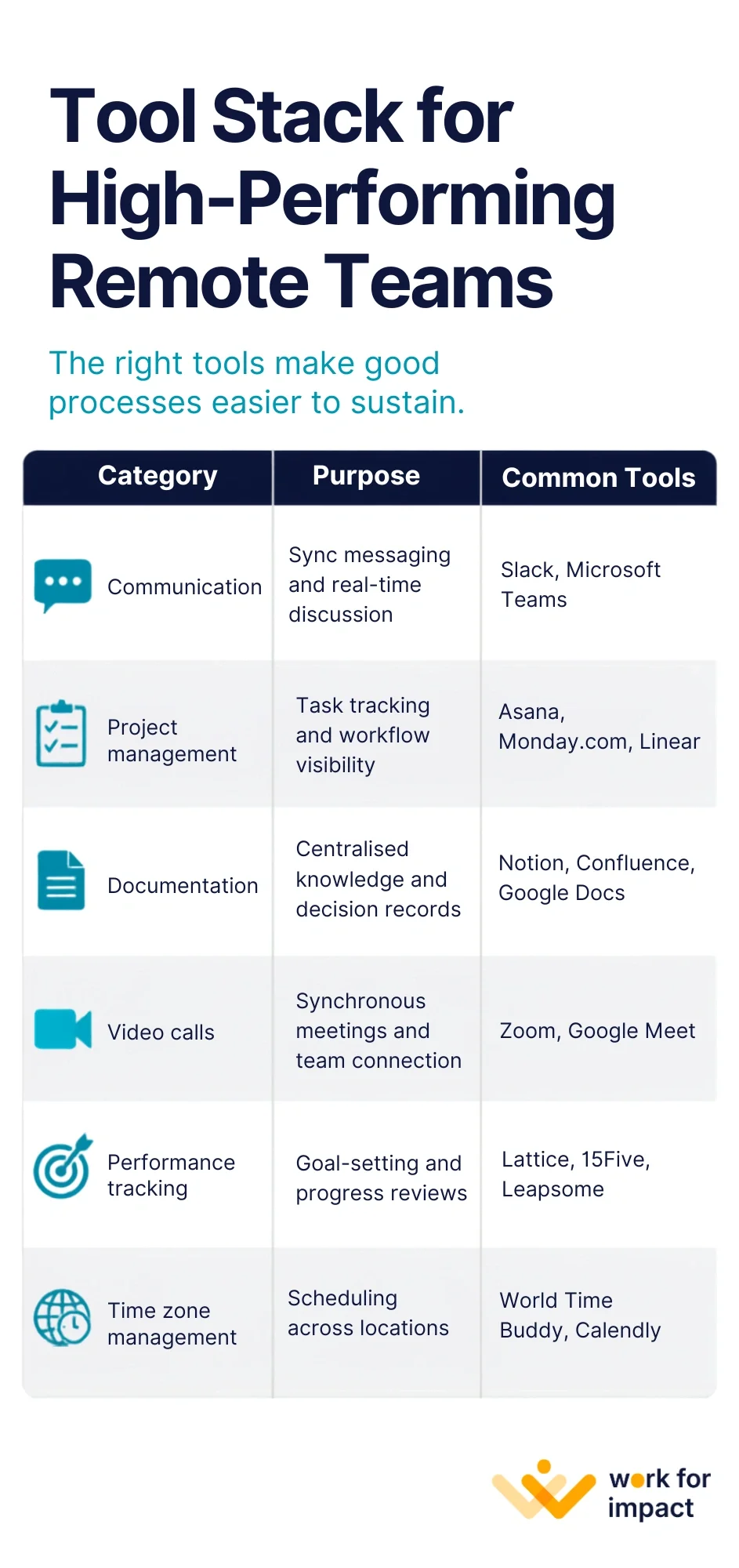
The most important principle when choosing tools is consolidation. Every additional platform adds cognitive load and creates another place where information can get lost. Start with the minimum viable stack and add only when a genuine gap appears.
Measure Performance by Outcomes, Not Online Activity
Micromanagement is often a response to the anxiety of not being able to see your team working. But it can undermine one of the biggest advantages of remote work: giving people more control over how they work. That flexibility matters — 78% of employees say flexible work options improve their overall health and happiness. The challenge for managers is providing enough structure for accountability without taking that flexibility away.
The alternative is outcome-based management. It is straightforward in principle and requires discipline in practice.
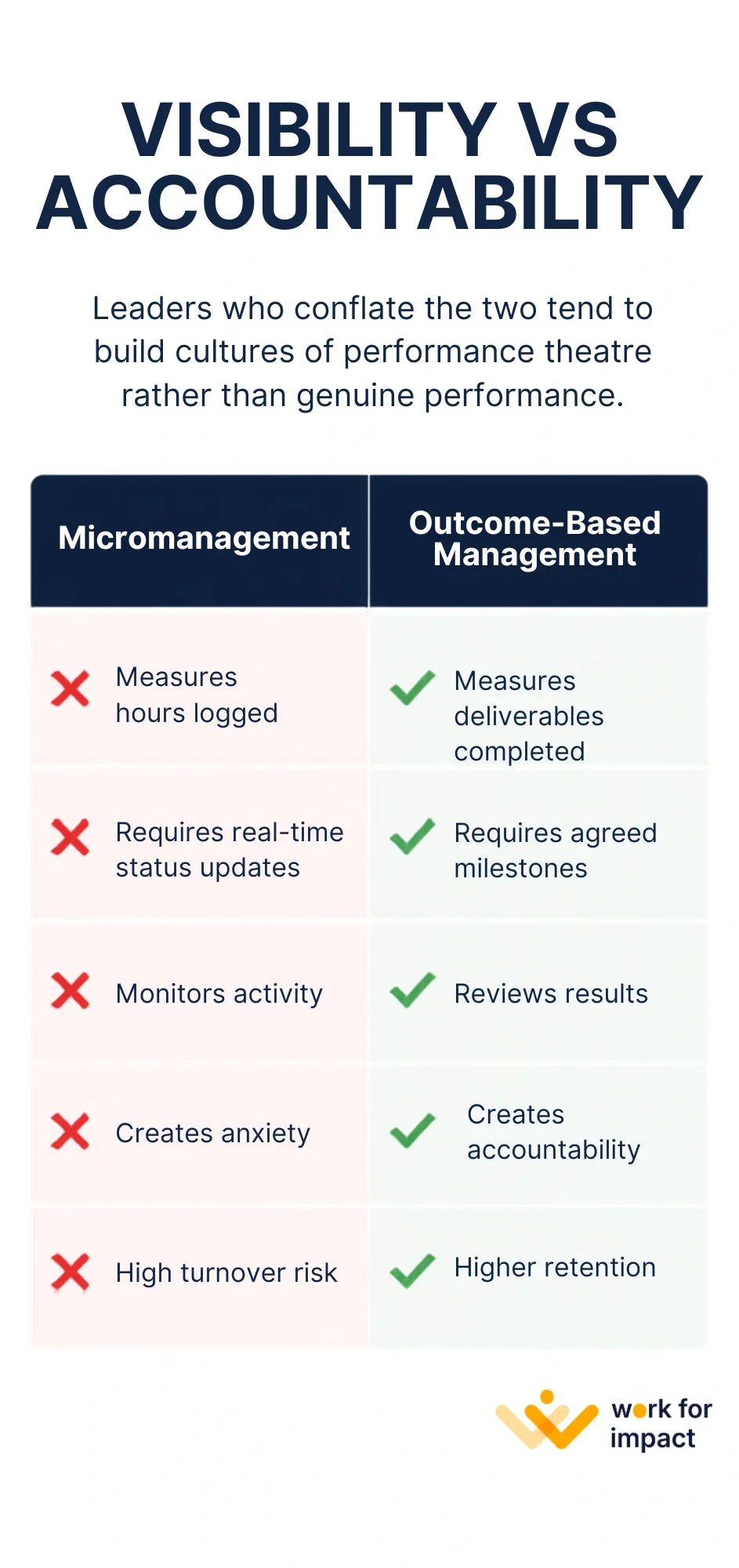
Requiring team members to keep their chat status active or log into monitoring software is a visibility measure, not an accountability measure. Accountability comes from agreed goals and honest conversations when those goals are not met. Leaders who conflate the two tend to build cultures of performance theatre rather than genuine performance.
How Does Global Hiring Change the Management Equation?
Managing a global remote team adds complexity around time zones, cultural norms, compliance, payroll, and onboarding. But it also opens your business to talent wherever it exists.
We've seen what well-integrated global teams can achieve:
- Outdoorsy: Built a cross-trained global CX team of 150+ people.
- Outside: Improved reply times by 91% with a team across three countries.
- Curiosity Stream: Reduced customer support costs by 75% while maintaining service quality.
These results came from treating global professionals as part of the business, with the same expectations, support, and respect as local team members.
Work for Impact helps manage the recruitment, payroll, compliance, and administration behind global hiring, while you retain control over who joins your team and how they're managed.
If you're building a distributed team, talk to one of our Talent Strategists about building a global team that works as part of your business.
Frequently Asked Questions
What is the biggest mistake leaders make when managing remote teams?
Measuring activity instead of outcomes. Leaders who monitor login times or schedule excessive check-ins are managing presence rather than performance. The fix is simple: define clear deliverables for every role and hold people accountable to those, not to how they fill their hours.
How do you onboard a remote employee effectively?
Start before Day 1. System access, tool logins, a structured first-week schedule, and a clear escalation path should all be ready before your new hire logs in. Assign a buddy for the first two weeks, set a 30-day milestone, and document your top processes so they reach independence faster.
How do you handle performance issues with a remote employee?
Address them early and directly. Set up a private call, be specific about what is not meeting expectations, agree on a clear improvement plan with measurable milestones, and follow up consistently. The same principles apply as in-person; you just need to be more deliberate about creating the space for the conversation.
How many hours of time zone overlap do remote teams need?
It depends on the role. Collaborative roles typically need three to four hours of daily overlap. Independent roles — writing, accounting, development — often need very little. Decide upfront what each role requires and hire accordingly.
How is managing a global remote team different from managing a local remote team?
Global teams add complexity around time zones, cultural norms, compliance, and payroll. The management principles are the same, but the operational infrastructure is more involved. A global talent partner who handles compliance and HR administration removes most of that complexity.
What is the best way to build culture in a fully remote team?
Through consistency, not events. Regular one-on-ones, visible recognition, and inclusive communication practices matter more than virtual socials. Leaders who model the culture they want to build — in how decisions are made and how disagreements are handled — are the ones whose teams reflect it.